Pesto Pasta with Fresh Asparagus
Highlighted under: Lazy Cooking | Quick Dishes
I absolutely love making Pesto Pasta with Fresh Asparagus. Every time I prepare this dish, the vibrant colors and fresh aromas fill the kitchen, making it a delight for both the eyes and the palate. The combination of al dente pasta and the creamy, herbaceous pesto is irresistible, while the tender asparagus adds a lovely crunch with every bite. This recipe is not only simple to whip up but also brings a touch of gourmet flair to weeknight dinners. Join me in savoring this beautiful plate of comfort!
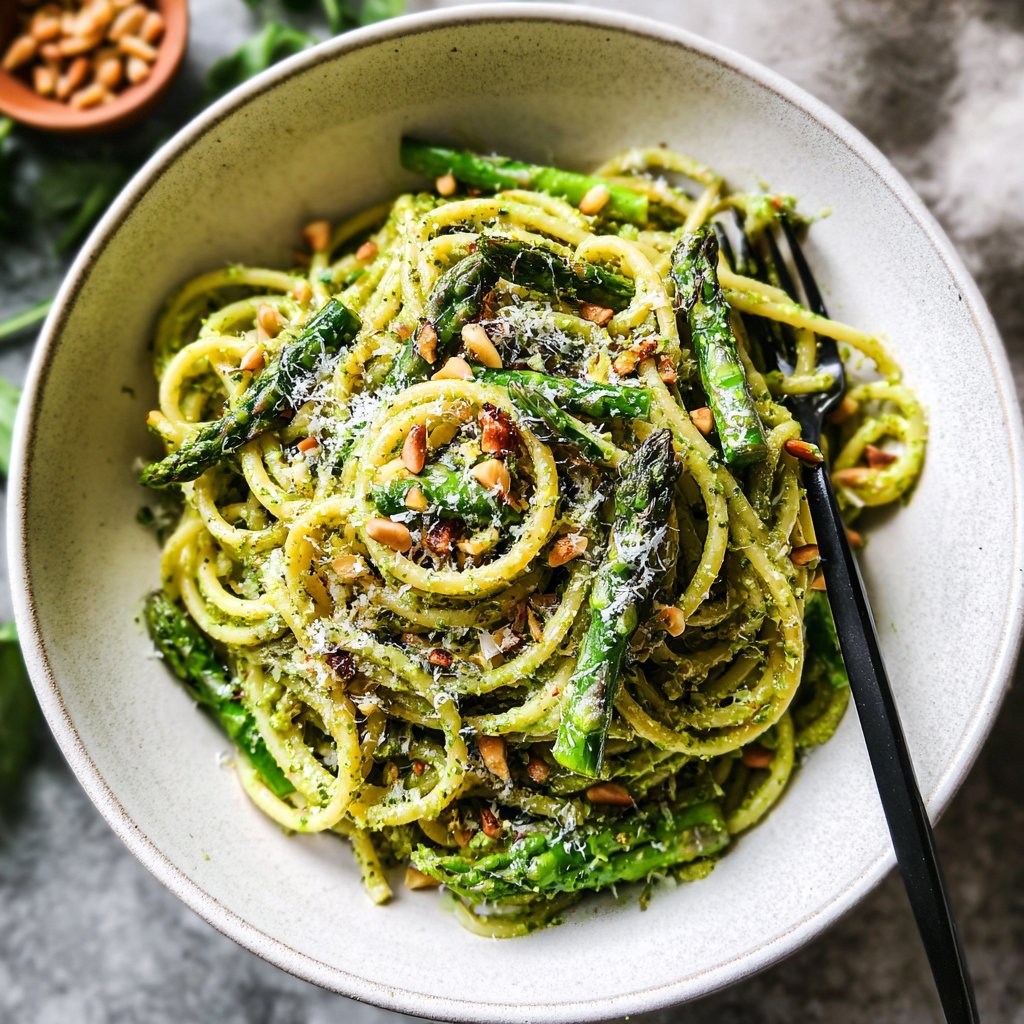
Preparing this Pesto Pasta with Fresh Asparagus has become a cherished tradition in my kitchen. I remember the first time I made it; the aromatic pesto blended smoothly with the pasta, and I was instantly hooked. The method works because toasting the pine nuts enhances their flavor, making the pesto rich and nutty. Pairing it with fresh asparagus adds a pop of color and nutrition!
One tip I discovered is to reserve a bit of pasta water before draining it. This starchy water helps to adjust the sauce’s consistency, making it cling beautifully to your pasta. Don’t forget to top it with freshly grated Parmesan for extra flavor!
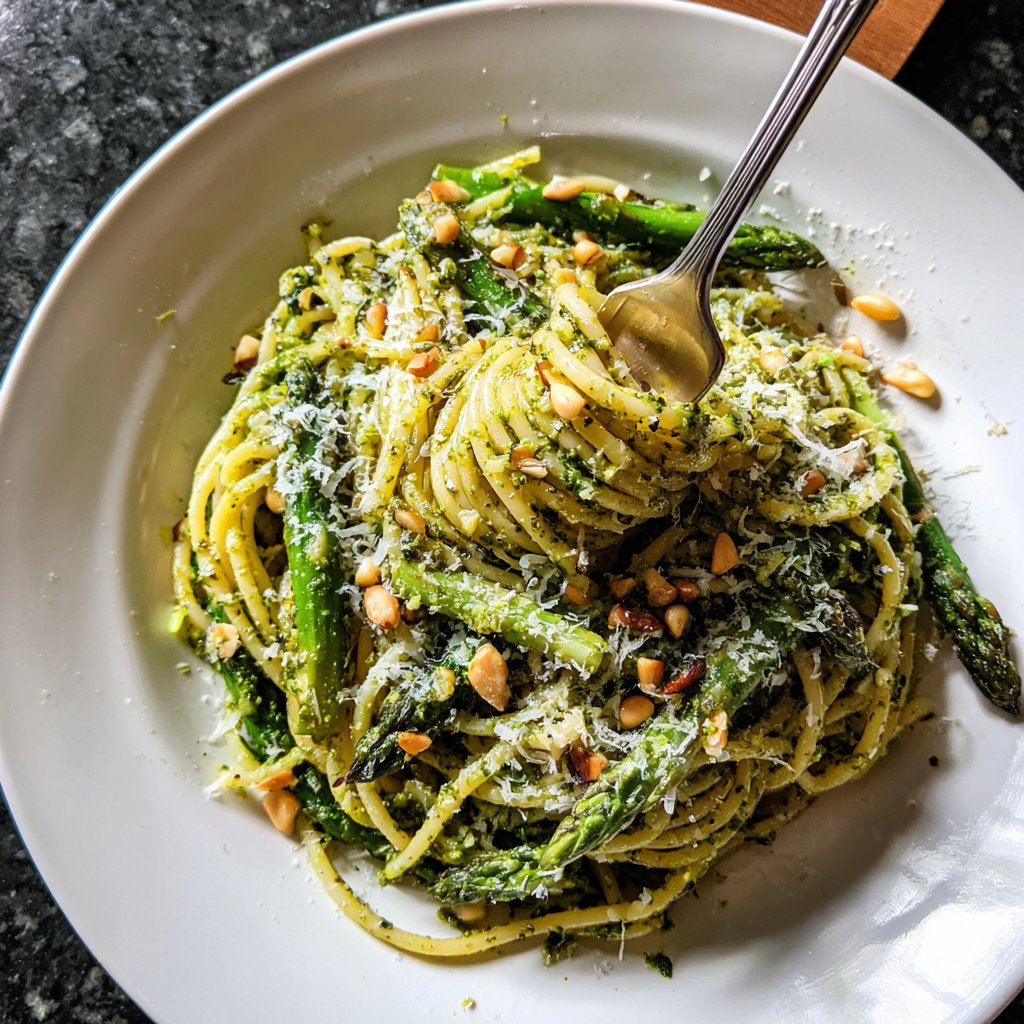
Why You Will Love This Recipe
- A delightful balance of flavors with fresh herbs and vegetables
- Quick and easy to prepare, perfect for busy weeknights
- Great for meal prep and tastes even better the next day
The Role of Pesto
Pesto serves as the heart of this dish, providing a creamy texture and a vibrant flavor profile. The combination of fresh basil, garlic, and pine nuts creates a sauce that bursts with herbal notes. The key is to use high-quality olive oil; a superior oil will enhance the overall taste. If basil is hard to find, consider using spinach or arugula as an alternative, but remember that it will slightly alter the taste of your pesto.
For a twist on the traditional recipe, you can experiment by adding sun-dried tomatoes or lemon juice to the pesto. This will not only add a burst of flavor but will also introduce an appealing color contrast. The balance between the nutty flavor from the pine nuts and the aromatic qualities of the basil is crucial, so sample your pesto and adjust the ingredients until it meets your palate's approval.
Cooking the Asparagus
Asparagus adds both texture and a pop of color to your pasta dish. To keep your asparagus vibrant and crisp, it’s best to add it to the pot in the final stages of pasta cooking—around two minutes before draining. This brief cooking time ensures the asparagus retains its crunch while also soaking up some flavor from the pasta water.
When selecting asparagus, look for bright green stalks with firm tips. Avoid any that appear wilted or have soft spots. If you have leftover asparagus, it can be lightly sautéed the next day and added to salads or omelets, providing a quick and healthy way to enjoy leftovers.
Serving Suggestions
To elevate your Pesto Pasta with Fresh Asparagus, consider serving it with a light salad dressed in vinaigrette to balance the richness of the dish. A crisp side salad with ingredients like arugula, cherry tomatoes, and lemon will complement the vibrant flavors of the pasta beautifully. Additionally, a slice of garlic bread can be a wonderful side to soak up any remaining pesto.
If you're looking for a heartier meal, you could add grilled chicken or shrimp to the pasta. Simply cook the protein on medium-high heat until golden brown and toss it with the pasta and pesto. This variation adds extra protein and transforms the dish into a satisfying main course for entertaining guests.
Ingredients
For the Pesto:
- 2 cups fresh basil leaves
- 1/2 cup pine nuts
- 1/2 cup grated Parmesan cheese
- 2 garlic cloves, minced
- 1/2 cup olive oil
- Salt and pepper to taste
For the Pasta:
- 12 oz spaghetti
- 1 bunch asparagus, trimmed and cut into 2-inch pieces
- Extra Parmesan for serving
- Lemon zest for garnish (optional)
Instructions
Prepare the Pesto
In a food processor, combine the basil leaves, pine nuts, Parmesan cheese, and minced garlic. Pulse until coarsely chopped. With the processor running, slowly add the olive oil until the mixture is smooth. Season with salt and pepper to taste.
Cook the Pasta
In a large pot, bring salted water to a boil. Add the spaghetti and cook according to the package directions until al dente. In the last 2 minutes of cooking, add the asparagus pieces. Drain and reserve some pasta water.
Toss Everything Together
Return the drained pasta and asparagus to the pot. Add the pesto and a splash of reserved pasta water. Toss until the pasta is well coated. Adjust the consistency if necessary.
Serve and Enjoy
Divide the pasta among serving plates, sprinkle with extra Parmesan and lemon zest if desired. Serve immediately and enjoy!
Pro Tips
- Add grilled chicken or shrimp for a protein boost. You can also use any leftover pesto for sandwiches or as a salad dressing.
Storage Tips
To keep your pesto pasta fresh, store it in an airtight container in the refrigerator. It should last for about 3 to 5 days. If the pasta seems dry upon reheating, simply add a splash of olive oil or a bit of reserved pasta water to improve the texture. You can also freeze portions of the pesto separately; just be sure to leave out the Parmesan until you’re ready to use it to avoid a grainy texture.
For best results when freezing, place the pesto in ice cube trays, freeze until solid, and then transfer the cubes to a freezer bag. This way, you can easily portion out just the right amount for future pasta dishes without having to make a full batch each time.
Substitutions and Variations
Feel free to get creative with the ingredients in your pesto. Nut allergies? Swap the pine nuts for sunflower seeds or omit nuts altogether and include cooked chickpeas for added creaminess. I often use nutritional yeast in place of Parmesan for a dairy-free option without sacrificing flavor. It's a fantastic substitute that lends a similarly rich taste.
For a spicy kick, consider adding a few red pepper flakes to your pesto. This adds warmth and complexity, complementing the fresh ingredients. Additionally, adding roasted bell peppers or zucchini into the pasta mix can further enhance the dish's flavor profile while ensuring you're incorporating more vegetables into your meal.
Questions About Recipes
→ Can I use store-bought pesto?
Yes, store-bought pesto can save time, but making your own adds freshness and flavor.
→ How do I store leftovers?
Store leftovers in an airtight container in the refrigerator for up to 3 days.
→ Can I make this dish gluten-free?
Absolutely, just use gluten-free pasta for a delicious alternative.
→ What other vegetables can I add?
You can add bell peppers, cherry tomatoes, or spinach for more color and flavor!
Pesto Pasta with Fresh Asparagus
Created by: The Stephaniesfood Team
Recipe Type: Lazy Cooking | Quick Dishes
Skill Level: Easy
Final Quantity: 4 servings
What You'll Need
For the Pesto:
- 2 cups fresh basil leaves
- 1/2 cup pine nuts
- 1/2 cup grated Parmesan cheese
- 2 garlic cloves, minced
- 1/2 cup olive oil
- Salt and pepper to taste
For the Pasta:
- 12 oz spaghetti
- 1 bunch asparagus, trimmed and cut into 2-inch pieces
- Extra Parmesan for serving
- Lemon zest for garnish (optional)
How-To Steps
In a food processor, combine the basil leaves, pine nuts, Parmesan cheese, and minced garlic. Pulse until coarsely chopped. With the processor running, slowly add the olive oil until the mixture is smooth. Season with salt and pepper to taste.
In a large pot, bring salted water to a boil. Add the spaghetti and cook according to the package directions until al dente. In the last 2 minutes of cooking, add the asparagus pieces. Drain and reserve some pasta water.
Return the drained pasta and asparagus to the pot. Add the pesto and a splash of reserved pasta water. Toss until the pasta is well coated. Adjust the consistency if necessary.
Divide the pasta among serving plates, sprinkle with extra Parmesan and lemon zest if desired. Serve immediately and enjoy!
Extra Tips
- Add grilled chicken or shrimp for a protein boost. You can also use any leftover pesto for sandwiches or as a salad dressing.
Nutritional Breakdown (Per Serving)
- Calories: 450 kcal
- Total Fat: 28g
- Saturated Fat: 5g
- Cholesterol: 20mg
- Sodium: 200mg
- Total Carbohydrates: 49g
- Dietary Fiber: 4g
- Sugars: 2g
- Protein: 12g